Appeal Letter for Denied Therapy Claim: 6 Easy Steps
An appeal letter for a denied therapy claim asks the payer to review its decision and pay the claim. A good letter is short, factual and sent on time. Before you write one, make sure an appeal is the right move, because some denials need only a corrected claim. This post gives six steps that work for private payers, and notes where Medicare and Medicaid differ.
If you would rather hand denials to an expert, see our denied claim follow-up and appeals service.
Step 1: Read the denial, not just the amount
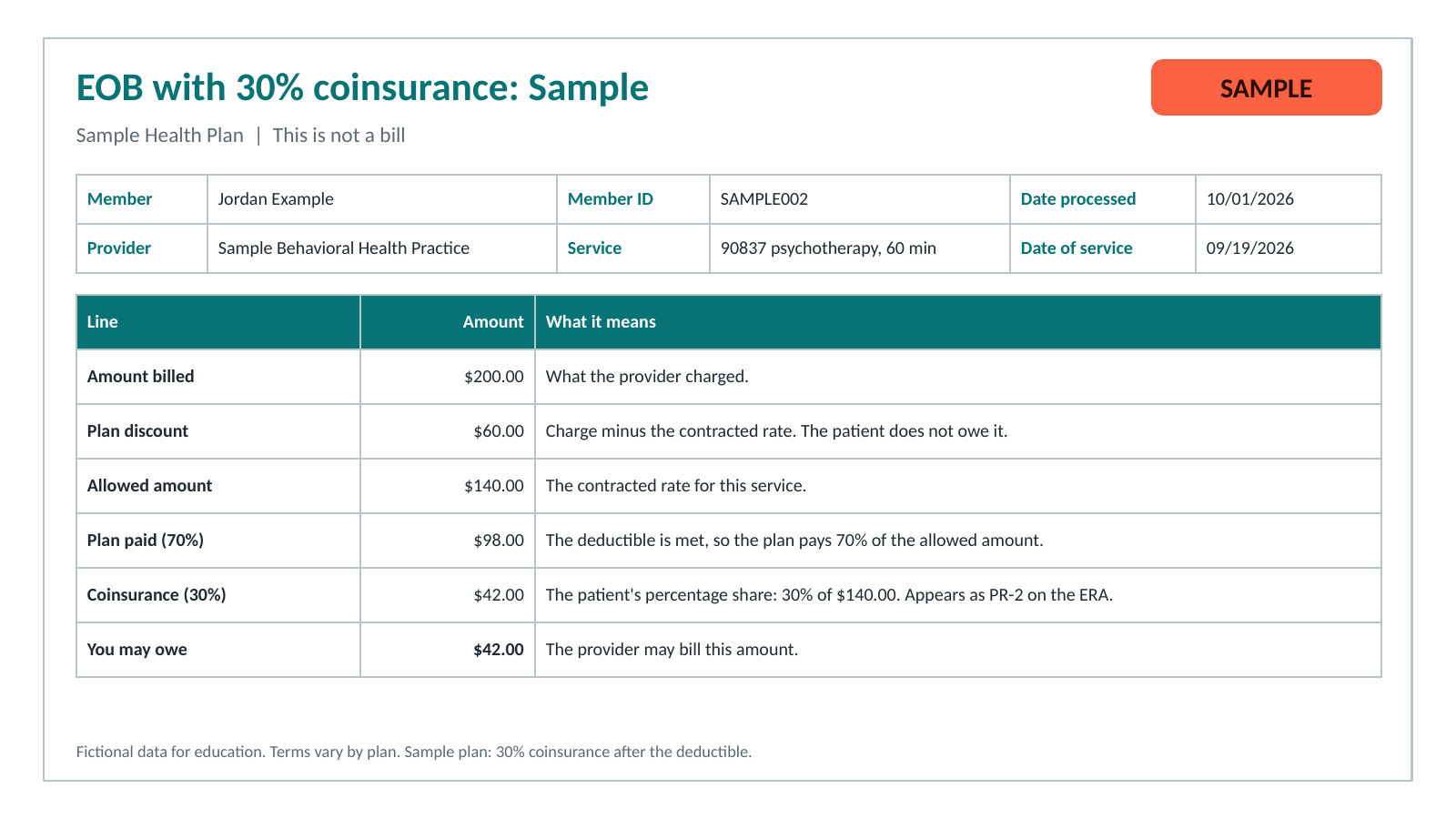
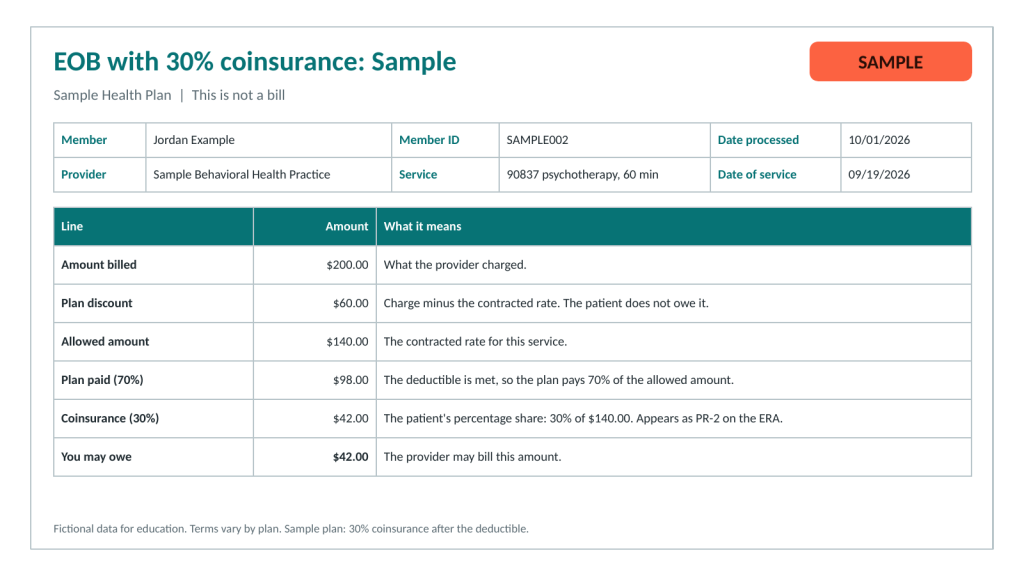
Open the explanation of benefits (EOB) or the electronic remittance advice (ERA). Find the claim number and the reason for the denial. Payers use standard codes, so look up the claim adjustment reason code (CARC) and any remittance advice remark code (RARC). The code tells you what the payer says went wrong. See our EOB glossary entry to read the page.
Step 2: Find the appeal deadline first
Every payer sets its own deadline for appeals, and it is usually printed on the denial letter or in the provider manual. Write the date on your calendar the day the denial arrives. A strong appeal that arrives late can be refused. Rules differ for private payers, Medicare and state Medicaid, so read the section below that applies to this claim. Our guide to timely filing for therapists covers the filing side.
Step 3: Decide whether a denied therapy claim needs a correction or an appeal
If the denial came from a typo, a missing modifier or a wrong code, a corrected claim is usually faster than an appeal. If the payer made a decision you disagree with, such as medical necessity or a missed authorization, write the appeal. A claim the payer rejected before processing is a different case, and our post on denied claim follow-up for therapists explains it.
Step 4: Gather the records the payer needs
Collect the claim copy, the denial letter, the authorization if there was one, and the notes that support the service. Send only what the payer needs, in line with HHS guidance on disclosures for payment. Keep a copy of everything you send.
Step 5: Write the appeal for your denied therapy claim
Keep it to one page. Open with the client’s name, the claim number, the date of service and the amount. State the denial reason in one sentence. Then give your reason the denial is wrong and cite the plan rule or the record that supports you. End with what you want: reprocess and pay the claim. Sign it, and list the attachments. Do not argue about the client’s care or add opinions the record does not support.
Step 6: Send it, track it and follow up
Use the payer’s required method, a portal or a mailing address, and keep proof of delivery. Add a follow-up date to your calendar. If the payer upholds its decision, look at the next level of appeal in the denial letter. Medicare and Medicaid follow their own levels, described below. Track each appeal in your monthly billing checklist.
How to appeal a denied therapy claim with a private payer, Medicare or Medicaid
Appeal rules for a denied therapy claim depend on who denied it. Keep the three tracks separate, and never assume one payer’s rule applies to another.
Private payers
The denial letter and the provider manual set the deadline, the address or portal and the number of appeal levels. Each plan writes its own rules, and they can vary by state.
Medicare
Original Medicare has five levels of appeal: redetermination by a Medicare Administrative Contractor, reconsideration by a Qualified Independent Contractor, a decision by the Office of Medicare Hearings and Appeals, review by the Medicare Appeals Council, and judicial review in federal court. The CMS Original Medicare appeals page explains each level. Confirm the filing deadline for your level on CMS.gov before you send anything.
Medicaid
Medicaid appeals follow the state program and, in managed care, the plan’s own process. They vary by state, so check your state Medicaid agency and the plan’s provider manual. Our state and regional billing guides list the rules we have covered.
| Payer type | Where the rules live | Deadline |
|---|---|---|
| Private payer | Denial letter and provider manual | Set by the plan |
| Medicare | CMS.gov appeals pages | Confirm on CMS.gov for your level |
| Medicaid | State agency and plan manual | Varies by state |
When to hand your appeals to an expert
Appeals take time you may not have between clients. A billing service reads each denial, files the fix or the appeal, and follows it to the end. Read whether to outsource therapy billing. You can also review denial management in our glossary.
See the full claim denials and appeals guide.
Frequently asked questions
What should an appeal letter for a denied therapy claim include?
Include the client name, claim number, date of service, the denial reason, your argument with supporting records, the outcome you want, and a signature with attachments listed.
How long do I have to appeal?
Each payer sets its own deadline. Check the denial letter or provider manual and put the date on your calendar when the denial arrives.
Should I appeal or send a corrected claim?
Send a corrected claim when a denied therapy claim has a fixable mistake. Appeal when you disagree with the payer’s decision.
What are the levels of a Medicare appeal?
Original Medicare has five levels: redetermination, reconsideration, a hearing decision, Appeals Council review and federal court review.
Does MCM South write appeals?
Yes. MCM South handles denied and rejected claim follow-up and appeals for psychotherapists and psychiatrists.
Where MCM South works
MCM South Medical Billing Service, LLC works with psychotherapists and psychiatrists in our ten currently served states: Georgia, Massachusetts, Connecticut, Texas, Florida, New York, Colorado, Tennessee, North Carolina and Illinois. We serve solo and medium-size practices that bill mental and behavioral health. Founder Michael Williams has worked with insurance payers in all 50 states. Browse the state and regional billing guides for rules that vary by state.
This post is operational guidance for billing, not legal advice. Rules change, so confirm with the payer or your counsel.