Allowed Amount in Therapy Billing: 5 Easy, Essential Facts
The allowed amount is the most a health plan will pay for a covered service. It is not the fee you charge. HealthCare.gov defines it in its allowed amount glossary entry. Understanding the allowed amount in therapy billing explains why. If your payments look smaller than your fees, the allowed amount is usually the reason. This post explains five facts every solo therapist and psychiatrist should know about it.
Our allowed amount glossary page lists the related terms.
Fact 1: The allowed amount is not your billed charge
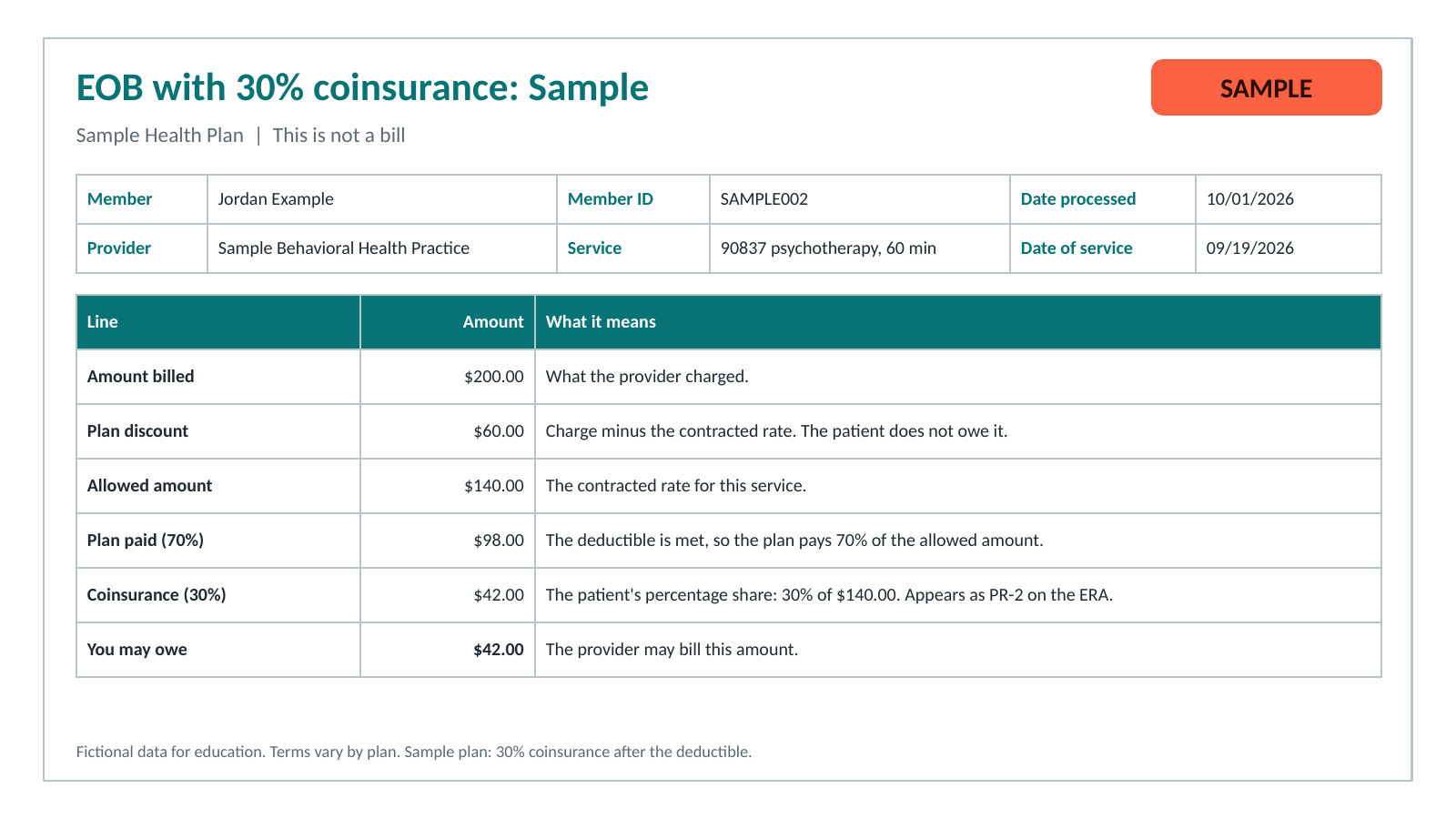
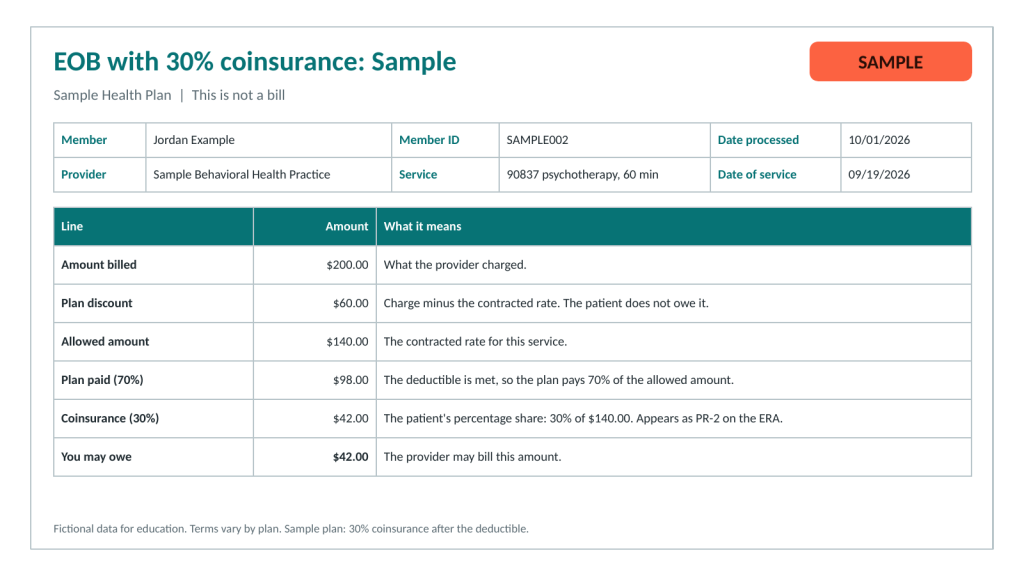
You set a fee. The payer sets the allowed amount for each code. When you are in network, your contract caps what you can collect for a covered visit at the allowed amount. The difference between your fee and that number is an adjustment, not an underpayment, and the explanation of benefits (EOB) shows it. See the EOB glossary entry. Keep this in mind for the allowed amount in therapy billing, and you will read every EOB faster.
Fact 2: The payer’s fee schedule sets the allowed amount in therapy billing
Most plans pay from a fee schedule, a list of allowed amounts by code. Ask for it when you join a network, and check it again when contracts renew. Different plans pay different amounts for the same visit, so keep each plan’s schedule on file.
Fact 3: The client’s share comes out of the allowed amount
Here is a hypothetical example, not a real rate. Say a plan’s allowed amount is $100 and the client still owes a deductible. The client pays toward that $100, not toward your fee. After the deductible, the client owes a copay or coinsurance, and the plan pays the rest of the allowed amount. Check this against your patient benefit verification notes so you can tell the client what to expect.
Fact 4: Out-of-network allowed amounts work differently
If you are out of network, the plan may base payment on its own allowed amount, and the client may owe more. Rules on what you can collect depend on your contract status and, in some cases, the law. See out-of-network billing for therapists and the glossary entry on balance billing. The allowed amount in therapy billing may be lower out of network, so plan for it.
Fact 5: Check each payment against the allowed amount in therapy billing
When a payment arrives, compare it to the allowed amount you expected. If it is lower, find out why: a modifier, a bundled code or a fee schedule change. Payment posting done carefully catches underpayments early. A billing service does this check on each remittance. Read what a billing service does each month, and see electronic claims submission and how therapists pay their billing service.
Frequently asked questions
What is the allowed amount?
It is the maximum a health plan pays for a covered service. Payment and the client’s share are both figured from it.
Is the allowed amount the same as my fee?
No. Your fee is what you charge. The allowed amount is what the plan recognizes, and in network you write off the difference.
Where do I find the allowed amount?
Look on the explanation of benefits or remittance advice, and in the payer’s fee schedule for your contract.
Can MCM South check my payments against allowed amounts?
Yes. MCM South posts payments and flags ones that do not match what the plan should have paid.
Where MCM South works
MCM South Medical Billing Service, LLC works with psychotherapists and psychiatrists in our ten currently served states: Georgia, Massachusetts, Connecticut, Texas, Florida, New York, Colorado, Tennessee, North Carolina and Illinois. We serve solo and medium-size practices that bill mental and behavioral health. Founder Michael Williams has worked with insurance payers in all 50 states. Browse the state and regional billing guides for rules that vary by state, or see our billing services.
This post is operational guidance for billing, not legal advice. Rules change, so confirm with the payer or your counsel.