

Mental Health Billing Services Anthem Midwest States Guide
If you’re a therapist in the Midwest with patients on Anthem Blue Cross, you know billing can feel like a second job. Denial rates for mental health claims are often double the industry average, and many billing services won’t handle Anthem at all. That’s why picking the right partner matters. This guide covers Anthem’s coverage in Midwest states, the biggest billing hurdles, and how to simplify your revenue cycle.
Understanding Anthem’s Mental Health Coverage in the Midwest
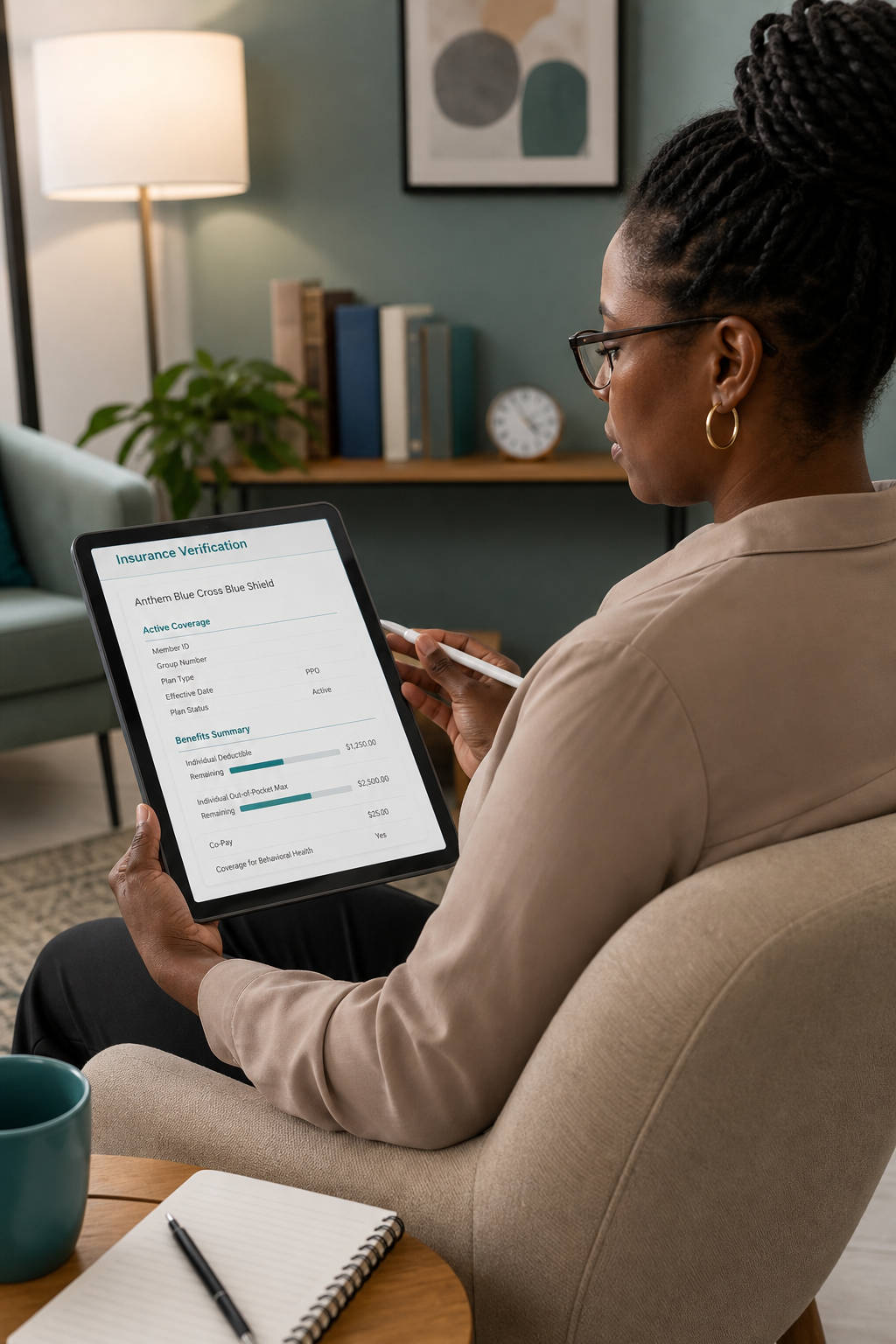
Anthem Blue Cross Blue Shield is one of the largest insurers in the Midwest, serving members in Indiana, Kentucky, Missouri, Ohio, and Wisconsin. But Anthem doesn’t manage mental health benefits directly. Instead, they contract with Carelon Behavioral Health(formerly Beacon Health Options) to handle authorizations, claims, and networks for behavioral health services. This carve-out means your claims go to a different payer than your medical ones , and errors in routing are common.
Each state also has its own Medicaid program that may or may not be administered by Anthem. Indiana uses the Healthy Indiana Plan (HIP), Kentucky has Kentucky Medicaid (MCOs include Anthem), Missouri uses MO HealthNet, Ohio has Ohio Medicaid with Anthem as one managed care plan, and Wisconsin uses BadgerCare Plus. Understanding which Anthem plan your patient holds is the first step to clean billing. For a deeper look at how we can help, see our billing service specialized 100% in mental health.
Under the Affordable Care Act, all Marketplace plans cover mental health and substance use disorder services as essential health benefits. Anthem’s plans are required to follow mental health parity rules, but enforcement is inconsistent. Knowing your patient’s exact benefits , deductible, copay, session limits , before every session prevents surprise denials.
Key Billing Challenges for Anthem Mental Health Claims
Anthem Blue Cross has one of the highest claim denial rates in the industry. A 2014 CBS investigation found denials for mental health care exceeding 90% at Anthem in some states. More recently, Anthem’s overall denial rate was 35% vs. the industry average of 17%. For therapists, that means a lot of lost revenue if you’re not prepared.
Here are the most common denial reasons specific to Anthem:
Ignoring these patterns can tie up 20% or more of your revenue in appeals. A seasoned mental health billing service knows exactly how to prevent and overturn these denials.
How to Simplify Anthem Billing for Your Practice

You can reduce Anthem denials by tightening your front-end processes. Here’s how:
- Verify insurance before every session. Benefits change monthly. Use real-time eligibility (EDI 270/271) 72 hours before each visit. Note deductible, copay, session limits, and auth requirements. Check out our patient insurance verification guide for details.
- Get prior authorization in writing. For codes like 90837, 90847, and any intensive services, confirm auth with Carelon. Track expiration dates and re-auth windows.
- Use correct CPT codes and modifiers. Time-based codes: 90832 (16-37 min), 90834 (38-52 min), 90837 (53+ min). Add modifier 95 for telehealth, GT if required by plan. Never bill 90837 without documentation of 53+ minutes face-to-face.
- Scrub claims before submission. Use a clearinghouse that checks Anthem-specific rules: time-to-code, diagnosis pointers, place of service (02 for telehealth, 11 for office). Aim for a clean claim rate above 95%.
- Appeal denials within 30 days. Anthem’s timely filing is usually 90 days, but don’t wait. Use the CARC/RARC codes to build your appeal. Include progress notes and medical necessity evidence.
For more on simplifying your entire revenue cycle, see our therapist’s guide to mental health billing services.
Why Partner with a Specialized Mental Health Billing Service
Billing for Anthem Blue Cross in the Midwest is complex because of state-specific plans, carve-outs, and high denial rates. A general medical biller may not know that Carelon handles behavioral claims or that Indiana’s Healthy Indiana Plan has different rules than Ohio’s Anthem plan. That’s where specialized billing services come in.
At MCM South Medical Billing Service, LLC, we focus exclusively on mental and behavioral health billing. We handle insurance eligibility verification, claim submission, denial management, and revenue cycle reporting for solo psychotherapists and small group practices across the United States, including all five Anthem Midwest states. Our team knows the nuances of Carelon, Anthem’s state-specific plans, and how to appeal level-of-care denials. We speak insurance so you don’t have to.
According to SAMHSA, the demand for mental health services is rising, and practices that outsource billing see faster reimbursement and fewer administrative burdens. By partnering with a dedicated service, you can focus on patient care while we protect your revenue.
For a full list of our services, visit our mental health insurance billing page.
Frequently Asked Questions
Who administers Anthem’s mental health benefits in the Midwest?
Carelon Behavioral Health (formerly Beacon Health Options) manages mental health claims for most Anthem commercial plans in Indiana, Kentucky, Missouri, Ohio, and Wisconsin. Always route claims to Carelon, not Anthem’s medical claims address.
Does Anthem cover telehealth therapy sessions?
Yes, Anthem Blue Cross covers telehealth mental health services. Use modifier 95 for Medicare and most commercial plans, or GT if required. Place of service should be 02 (telehealth) unless the patient is in the office. Check with Anthem’s specific plan for any session limits.
What is the most common Anthem denial code for mental health?
CO-197 (level of care) and CO-50 (medical necessity) are frequent. You’ll also see CO-97 (missing authorization) and PR-1 (deductible not met). Always appeal CO-197 with documentation supporting the higher level of care.
How can I appeal an Anthem denial effectively?
First, review the CARC/RARC codes on your remittance advice. Gather progress notes, initial evaluation, and functional assessments (e.g., PHQ-9, GAD-7). Write a concise appeal letter connecting the diagnosis to the treatment plan. Submit within the appeal window (usually 180 days but varies by state). Consider using a billing service that handles this for you.
Should I bill Anthem directly or through Carelon?
For behavioral health services, submit claims through Carelon Behavioral Health. The payer ID for electronic claims is often different from Anthem’s medical payer ID. Verify the correct payer ID on the patient’s insurance card or through the Carelon provider portal.
How long does Anthem take to pay mental health claims?
Anthem typically pays within 15, 30 days for electronic claims. However, denials and requests for additional information can delay payment. Clean claims with proper prior authorization are paid fastest. Some states have prompt-pay laws requiring payment within 30 days.
Conclusion
Billing Anthem in the Midwest doesn’t have to drain your time and revenue. Focus on verifying benefits, securing prior authorizations, and documenting medical necessity. If that sounds like a lot, you’re not wrong , many therapists find it unsustainable. That’s why we recommend partnering with a billing service that knows mental health inside and out. MCM South Medical Billing Service, LLC is built for therapists like you, handling the insurance maze so you can do what you do best. Ready to simplify? Explore our services and see how we can help.
Related resources
- State and Regional Billing Guides
- Electronic remittance advice (ERA)
- CARC and RARC codes
- Resources hub for behavioral health billing
- Billing Terms Glossary
- Who MCM South serves
- Mental health billing FAQ
Ready to hand off the billing? Get a free quote or schedule a consultation with MCM South, a billing service for psychotherapists and psychiatrists.