


Best Mental Health Billing Services Eastern Massachusetts
Choosing a best mental health billing services eastern massachusetts starts with scope, payer knowledge and credentialing support. These five questions help therapists, psychiatrists and practice managers compare options before they hand over claims.
Best mental health billing services eastern massachusetts: 5 questions to ask
- Does the service work only in mental and behavioral health, so it knows the psychotherapy codes and the psychiatric evaluation and management (E/M) codes you bill?
- What does the written scope cover: insurance verification, claim submission, denial follow-up, secondary claims and reporting?
- How are denied and rejected claims worked and appealed, not just sent?
- Who handles payer enrollment and credentialing, and what stays with your practice?
- How does the service handle payer rules that differ by state and by plan type?
Billing for mental health services in Eastern Massachusetts is complicated. Between MassHealth rules, private insurance nuances, and ever-changing CPT codes, it’s easy to lose hours on paperwork. That’s where specialized billing services come in. Here’s a curated look at the resources and partners that can help you get paid faster and focus on patients.
1. MCM South Medical Billing Service, LLC (Our Top Pick)
MCM South is a managed medical billing service that focuses 100% on mental and behavioral health. They handle insurance eligibility verification, claim submission, denial management, and revenue cycle reporting for solo practitioners and small group practices across the United States, including Eastern Massachusetts.
What sets them apart is deep expertise with the specific payers you deal with locally: MassHealth, Medicare, Blue Cross, United Healthcare, Optum, WellSense, Aetna, Cigna, Anthem, and more. They also understand the nuances of outpatient CPT codes (90791, 90834, 90837, 90847) and HCPCS codes (H2019, H2020) used in community-based programs. The team knows how to handle telehealth modifiers, supervision requirements, and the quirks of EAP billing.
Because they work exclusively with mental health providers, they’ve built workflows that reduce claim rejections and speed up reimbursement. Their system integrates with EHRs like SimplePractice and TherapyNotes, so you don’t have to double-enter data.
The honest caveat: they’re a full-service partner, not a DIY software. If you prefer to handle billing in-house with occasional guidance, you might look elsewhere. But if you want to outsource the headache and get back to clinical work, MCM South is the clear choice for Eastern Massachusetts providers.
Understanding Massachusetts Billing Regulations: CBHI, CPT, and HCPCS Codes

Massachusetts has its own set of rules. The Children’s Behavioral Health Initiative (CBHI) dictates billing for intensive care coordination, in-home therapy, therapeutic mentoring, and family support. These services use HCPCS codes like H2019 (therapeutic behavioral services, per 15 minutes) and H2020 (per diem). Proper documentation and authorization are critical; mistakes lead to denials. Mass.gov’s CBHI page has the official guidelines.
Outpatient practices use CPT codes: 90791 (initial diagnostic evaluation), 90834 (45-minute psychotherapy), 90837 (60-minute), 90847 (family therapy). For psychiatry, add 99213/99214 for medication management. Telehealth adds modifiers like 95 or GT. Each payer may have different coverage rules, so verifying benefits ahead of time is essential.
Your billing partner must understand the difference between MassHealth, Medicare, and commercial plans. CMS mental health coverage provides federal standards, but state-specific Medicaid rules vary. A service like MCM South stays current on these changes so you don’t have to.
Key Criteria for Choosing a Mental Health Billing Partner
Not all billing services are created equal. When evaluating options for Eastern Massachusetts, consider these factors:
- Payer expertise: Does the service know MassHealth, Blue Cross, United, and local plans?
- Code proficiency: Can they handle the full range of CPT and HCPCS codes your practice uses?
- Technology integration: Does their system connect with your EHR (SimplePractice, TherapyNotes, etc.)?
- Transparency: Do they provide regular reports on claims, denials, and collections?
- Support: Can you reach a real person when a claim is rejected?
One common mistake is choosing a general medical billing company that treats mental health like any other specialty. Behavioral health has unique rules, supervision requirements for LPCs, LMFTs, LCSWs, and specific telehealth modifiers. A dedicated partner understands these nuances. For a deeper look at the decision process, see our comparison of billing software vs. service.
Another factor: look for services that offer insurance verification and patient collections. Many denials happen because benefits weren’t checked beforehand. Outsourcing verification can save hours each week. Learn more about insurance verification tools and how they fit into your workflow.
Top EHR Platforms for Smooth Billing Integration
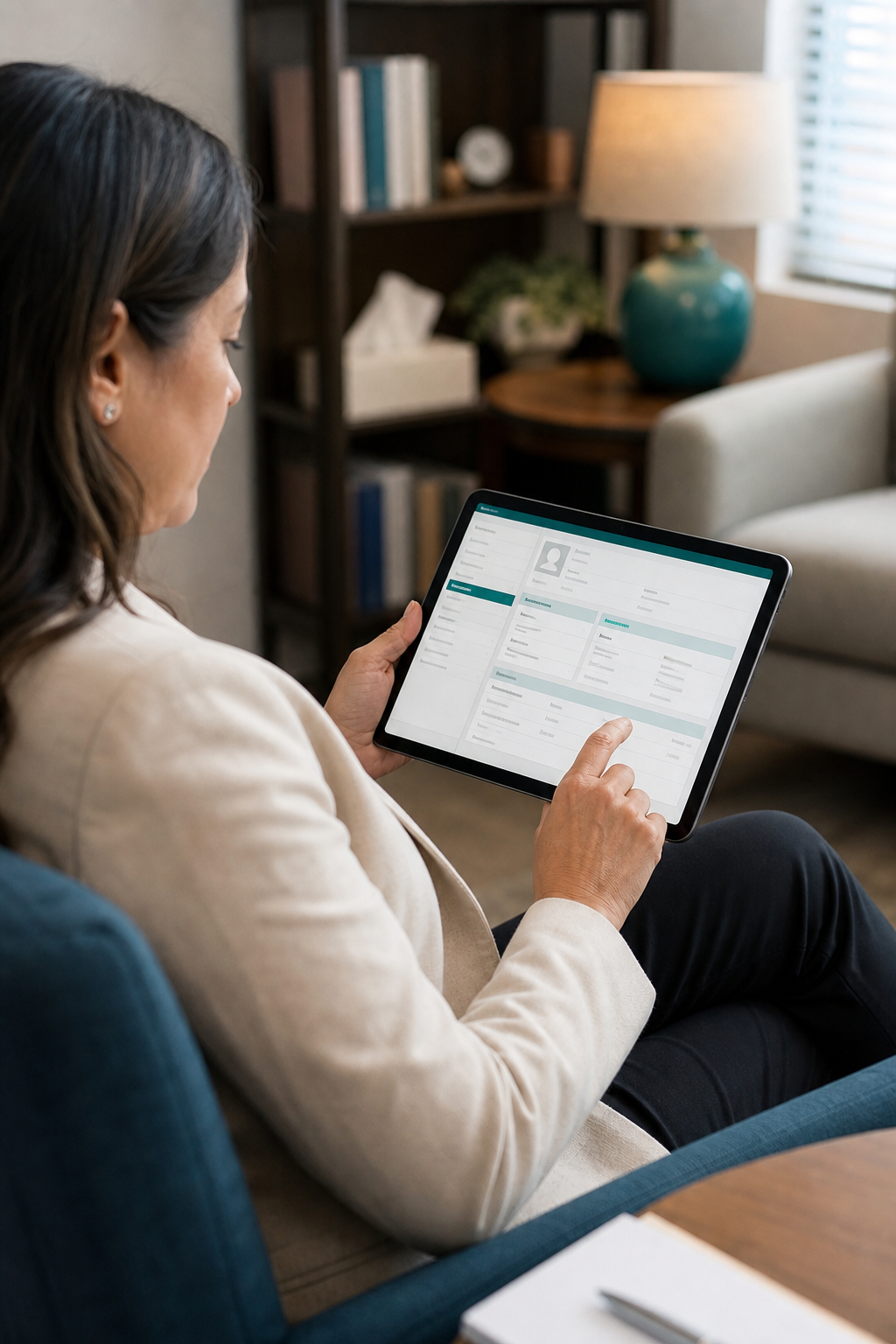
Your EHR and billing service need to talk to each other. The leading platforms for behavioral health in 2026 include:
- SimplePractice, User-friendly, strong billing module, great for solo therapists.
- TherapyNotes, Strong scheduling and documentation, integrates with many clearinghouses.
- TheraNest, Good for group practices, includes client portal and billing.
- Tebra (Kareo), Complete for larger practices, but can be complex.
- Valant, Designed specifically for behavioral health, with built-in billing analytics.
- AdvancedMD, Full-featured, suitable for multi-provider clinics.
- ICANotes, Structured for behavioral health documentation, integrates with major payers.
Your billing service should be compatible with whatever EHR you use. MCM South, for example, works with most major platforms, and they specialize in mental health EHRs. If you’re considering a switch, evaluate how well the integration handles clearinghouse transmissions and ERA/EFT payments.
Don’t forget to check whether the EHR handles the specific codes you use, like H2019 for CBHI, and whether it supports telehealth modifiers. A platform that doesn’t accommodate these can cause claim rejections.
Handling Insurance Networks: MassHealth, Medicare, and Private Payers
Eastern Massachusetts has a dense payer landscape. MassHealth (Massachusetts Medicaid) has specific billing requirements, especially for CBHI services. Providers must be enrolled, and many services require prior authorization. Medicare, meanwhile, has its own rules for mental health coverage, including the 60-minute session code 90837. Private insurers like Blue Cross Blue Shield of Massachusetts, UnitedHealthcare, Aetna, Cigna, and WellSense all have different credentialing processes and fee schedules.
One challenge is that some payers (like United Behavioral Health) require separate authorizations for CPT 90837. A billing service that knows these details can prevent lost revenue. Healthcare.gov outlines the minimum coverage standards, but state and network-specific rules vary.
The key is to have a partner who handles credentialing, eligibility verification, and claim follow-up across all your payers. This is where a specialist like MCM South shines. They manage the entire cycle, from verifying benefits to appealing denials. For a more detailed look at how billing services handle patient payments and payer contracts, see our guide to mental health billing services.
Also, remember that many patients have out-of-network benefits. If you’re an out-of-network provider, the billing service can help you handle the superbill process and collect patient payments efficiently.
Massachusetts Insurance Payers: Private & Government Plans
Eastern Massachusetts providers bill across a mix of commercial and public payers, and each one comes with its own credentialing process, fee schedule, and authorization rules. Knowing the landscape, and which plans dominate in your area, helps you avoid surprises and keep claims clean. Below is a breakdown of the major private and government payers you’re likely to encounter.
Private & Commercial Payers
- Blue Cross Blue Shield of Massachusetts — The state’s largest commercial insurer; a must-have contract for most Eastern Massachusetts practices, with extensive behavioral health coverage.
- UnitedHealthcare / Optum Behavioral Health — Behavioral health is managed through Optum, which often requires separate authorizations for certain codes like 90837.
- Aetna — A national commercial payer with a strong Massachusetts presence and its own credentialing and fee schedules.
- Cigna / Evernorth — Behavioral health claims are administered through Evernorth; understand their telehealth and session-length rules.
- Harvard Pilgrim Health Care — A regional New England plan widely used by Eastern Massachusetts employers and members.
- Tufts Health Plan / Point32Health — Now part of Point32Health, this is a major regional payer for commercial and public members.
- WellSense Health Plan — Offers commercial and public coverage; common among community-based mental health programs.
- AllWays Health Partners / Mass General Brigham Health Plan — Affiliated with Mass General Brigham, growing in the Eastern Massachusetts market.
Government & Public Payers
- MassHealth (Massachusetts Medicaid) — The state Medicaid program; central to CBHI and community behavioral health billing, with strict enrollment and authorization rules.
- Tufts Health Together (MassHealth MCO) — A MassHealth managed care organization through Point32Health serving Medicaid members.
- WellSense MassHealth (ACO/MCO) — Administers MassHealth coverage through ACO and MCO arrangements common in Eastern Massachusetts.
- Medicare / CMS — Federal coverage for seniors and eligible individuals, with its own mental health coverage and documentation standards.
- TRICARE (military/veteran families) — Covers active-duty, retired military, and their families; important for practices near military communities.
- Children’s Behavioral Health Initiative (CBHI) — Governs MassHealth-funded children’s behavioral health services with specific HCPCS codes and authorization requirements.
The Need for Documentation
Thorough clinical documentation is the backbone of clean claims in mental health billing. Every claim you submit should be supported by records that establish medical necessity, detailed session notes, an up-to-date treatment plan, and time-based support for the CPT codes you bill (for example, the actual session duration that justifies 90834 versus 90837). When this documentation is complete and consistent, claims process smoothly and your practice is protected if a payer requests records.
Poor or incomplete documentation is one of the leading causes of denials and post-payment clawbacks. Payers, including MassHealth and commercial plans, routinely audit behavioral health providers, and missing authorization records, vague progress notes, or notes that don’t match the billed code can result in recouped payments months after a service was rendered. Maintaining authorization records and aligning your notes with the services billed is essential audit protection.
Following recognized standards keeps your records defensible. Review the CMS documentation and medical necessity standards to understand what payers expect, and build documentation habits into your daily workflow. A dedicated billing partner like MCM South can flag documentation gaps before claims go out, reducing denials and protecting your revenue.
Areas We Serve in Eastern Massachusetts
Our team supports clinicians across the region’s busiest communities, tailoring our work to the payers and practice types common in each city. Here’s a closer look at the Eastern Massachusetts cities we serve.
- Boston — We provide mental health billing services in Boston, MA for private therapy practices navigating the city’s dense commercial and MassHealth payer mix. Our behavioral health billing services in Boston, MA cover everything from eligibility checks to denial appeals, and our solo practice billing services in Boston, MA give independent therapists a full revenue cycle team without the overhead.
- Cambridge — From group clinics near the universities to independent clinicians, our mental health billing services in Cambridge, MA for private therapy practices keep claims clean and reimbursements timely. We pair behavioral health billing services in Cambridge, MA with dedicated solo practice billing services in Cambridge, MA so smaller offices get the same expertise as large groups.
- Quincy — Practices along the South Shore rely on our mental health billing services in Quincy, MA for private therapy practices to manage Medicare, MassHealth, and commercial plans. Our behavioral health billing services in Quincy, MA and solo practice billing services in Quincy, MA help local therapists reduce rejections and get paid faster.
- Newton — We offer mental health billing services in Newton, MA for private therapy practices serving the area’s many independent and group providers. With behavioral health billing services in Newton, MA and solo practice billing services in Newton, MA, clinicians can hand off the paperwork and focus on clients.
- Somerville — Our mental health billing services in Somerville, MA for private therapy practices support the growing community of therapists in this dense, fast-changing city. We deliver behavioral health billing services in Somerville, MA along with solo practice billing services in Somerville, MA built for one-clinician offices.
- Brookline — Therapists in Brookline trust our mental health billing services in Brookline, MA for private therapy practices to handle their commercial and out-of-network claims. Our behavioral health billing services in Brookline, MA and solo practice billing services in Brookline, MA streamline verification, submission, and collections.
- Framingham — We bring mental health billing services in Framingham, MA for private therapy practices to MetroWest clinicians who bill across a wide payer landscape. Through behavioral health billing services in Framingham, MA and solo practice billing services in Framingham, MA, we help local providers keep their revenue cycle running smoothly.
- Waltham — Our mental health billing services in Waltham, MA for private therapy practices give independent and group offices reliable claim management. We combine behavioral health billing services in Waltham, MA with solo practice billing services in Waltham, MA so therapists can spend less time on insurance and more time in session.
- Medford — We provide mental health billing services in Medford, MA for private therapy practices working with MassHealth ACOs and commercial plans alike. Our behavioral health billing services in Medford, MA and solo practice billing services in Medford, MA support clinicians who want a dedicated billing partner.
- Malden — Practices in Malden use our mental health billing services in Malden, MA for private therapy practices to manage credentialing, eligibility, and denials. Our behavioral health billing services in Malden, MA and solo practice billing services in Malden, MA are designed for both growing groups and solo therapists.
- Lynn — Our mental health billing services in Lynn, MA for private therapy practices serve North Shore clinicians who handle a high volume of MassHealth and community-based claims. With behavioral health billing services in Lynn, MA and solo practice billing services in Lynn, MA, we help local providers protect their revenue.
- Brockton — We deliver mental health billing services in Brockton, MA for private therapy practices that bill across diverse public and commercial payers. Our behavioral health billing services in Brockton, MA and solo practice billing services in Brockton, MA give independent therapists the support they need to stay financially healthy.
FAQ
What are the most common mental health billing mistakes in Massachusetts?
The biggest mistakes are using the wrong CPT code for session length (e.g., billing 90834 for a 60-minute session), missing prior authorization for CBHI services, and not verifying MassHealth eligibility before each visit. These errors lead to denials and delayed payments.
How do I find a billing service that works with MassHealth?
Look for a billing service that specifically lists MassHealth experience and understands CBHI programs. MCM South is one example, they handle MassHealth claims and the required authorizations. Always ask about their experience with MassHealth billing before signing a contract.
Can I use my current EHR with a billing service?
Most billing services integrate with popular EHRs like SimplePractice, TherapyNotes, and TheraNest. Check with the billing company to confirm compatibility. MCM South integrates with many major EHRs, making the transition smooth.
What is the difference between billing software and a billing service?
Billing software is a tool you use to submit claims yourself; a billing service does it for you. Software gives you control but takes time. A service handles everything from claim submission to denial management, freeing you to focus on patients. For small practices, a service often saves money in the long run.
How much does a mental health billing service cost in Eastern Massachusetts?
Pricing varies. Most services charge a percentage of collections (typically 5-10%) or a flat monthly fee. Some have setup fees. MCM South offers customized quotes based on your practice size and volume. It’s best to request a proposal and compare total cost against time saved.
Conclusion
Choosing the right billing partner for your mental health practice in Eastern Massachusetts comes down to expertise, integration, and trust. MCM South combines deep knowledge of local payers, a dedicated focus on mental health, and smooth EHR integration. Start by reaching out for a consultation, they’ll help you evaluate your current revenue cycle and show how they can improve it.
Mental health billing for Eastern Massachusetts
Out-of-Network Shouldn’t Mean Out of Pocket, Eastern Massachusetts
We bill out-of-network claims for therapists and psychiatrists, so you don’t carry the paperwork.
- Mental and behavioral health only, since 2010
- Built for psychotherapists and psychiatrists, solo or mid-size practices
- Insurance verification, electronic claims, denial follow-up, secondary and out-of-network claims
Ready to see what a billing team that only does mental health can do for your practice?
Get My Free QuoteOr schedule a free consultation
Serving practices in GA, MA, CT, TX, FL, NY, CO, TN, NC and IL.
FAQ: best mental health billing services eastern massachusetts
What should the best mental health billing services in Eastern Massachusetts cover?
Good mental health billing services handle the insurance side of your revenue cycle: verifying benefits, submitting claims, following up on denied and rejected claims, and reporting. Ask for the scope in writing so you know which tasks stay with your office.
How is psychotherapy billing different from psychiatry billing?
Psychotherapy claims rely on time-based psychotherapy codes. Psychiatric visits are usually billed with evaluation and management (E/M) codes, sometimes with add-on codes. A service that supports both should be able to explain how it handles each.
Do billing rules change by state in Eastern Massachusetts?
Yes. Medicaid programs, plan rules and state requirements vary by state and by payer. Keep private insurance, Medicare and Medicaid rules separate, and confirm current requirements with each payer or state agency before you change how you bill.
Does a billing service handle credentialing?
Not always. Credentialing, also called payer enrollment, is separate work from claim billing. Ask who handles it, what the process involves, and what your practice still has to submit.
How do I compare billing services for Eastern Massachusetts?
Ask each one for a written scope, how it works denied and rejected claims, how it reports, and whether it works only in mental and behavioral health. MCM South Medical Billing Service bills for solo and group practices of psychotherapists and psychiatrists.