


Anthem Mental Health Billing: Northeast & Southeast Guide
Mental health providers in the Northeast and Southeast face a unique challenge: Anthem Blue Cross Blue Shield operates differently across state lines, and its behavioral health administrator, Carelon, adds another layer to billing. This guide walks you through the essentials, from verification to appeals, so you can keep your revenue cycle running smoothly. We focus on the Anthem BCBS plans in Connecticut, Maine, New Hampshire, New York (partial), Virginia, and Georgia, plus their state Medicaid programs and major commercial payers.
Table of Contents
- Understanding Anthem’s Behavioral Health Coverage
- Verification of Benefits (VOB) for Anthem Patients
- Key CPT and HCPCS Codes for Outpatient Mental Health
- Claim Submission Best Practices for Anthem
- Managing Anthem Denials and Appeals
- State-Specific Considerations: Northeast vs Southeast
- How MCM South Simplifies Anthem Billing for Your Practice
- Frequently Asked Questions
- Conclusion
Understanding Anthem’s Behavioral Health Coverage
Anthem Blue Cross is the largest for-profit member of the Blue Cross Blue Shield Association, with over 45 million members nationwide ( Wikipedia). For mental health services, Anthem outsources administration to Carelon Behavioral Health(formerly Beacon Health Options). That means claims often need to go to Carelon, not directly to Anthem, depending on the plan.
In the Northeast, Anthem BCBS plans cover Connecticut (Anthem BCBS of CT), Maine (Anthem BCBS of Maine), New Hampshire (Anthem BCBS of NH), and parts of New York (Anthem BCBS in some counties, but not NYC). In the Southeast, Anthem has a strong presence in Virginia (Anthem BCBS of Virginia) and Georgia (Anthem BCBS of Georgia). Each state has its own network, fee schedules, and prior authorization rules. For example, Anthem’s mental health page emphasizes using in-network providers and the Sydney Health app for virtual visits, but the specifics vary by state.
Key takeaway: Always check the member’s ID card to identify the correct payer ID and whether Carelon processes the behavioral health benefits. A common error is submitting claims to Anthem when they require Carelon routing.
Verification of Benefits (VOB) for Anthem Patients
Why Behavioral Health Therapists Should Verify Insurance, that’s not just a title; it’s a daily necessity. For Anthem patients, verification means confirming exact coverage for outpatient mental health, including copay, deductible, coinsurance, and session limits.
 Start by calling the number on the back of the card or using Anthem’s Availity portal. Ask specifically:
- Is mental health coverage through Anthem Blue Cross or Carelon Behavioral Health?
- What is the patient’s copay or coinsurance for outpatient therapy (CPT 90837, 90834)?
- Does the deductible apply? If so, how much remains?
- Are there session limits per year?
- Is telehealth covered at the same rate?
Document everything. We recommend using a verification tool or service, Patient Insurance page explains how MCM South handles this step. For state Medicaid programs like HUSKY Health (CT), MaineCare, NH Medicaid, NY Medicaid, Virginia Medicaid (Cardinal Care), and Georgia Medicaid, verification may require separate portals or phone lines.
A simple mistake at this stage can lead to denied claims or unexpected patient balances. Always verify 24, 48 hours before the appointment.
Key CPT and HCPCS Codes for Outpatient Mental Health
Using the right codes is critical for clean claim submission. Here’s a quick reference for the most common outpatient mental health codes submitted to Anthem and Carelon.
For community-based programs like Massachusetts CBHI (Children’s Behavioral Health Initiative), HCPCS codes H2019 and H2020 are common, but since our focus is on Anthem Northeast and Southeast, note that CBHI is specific to MassHealth, not Anthem. However, some Anthem plans may cover similar intensive outpatient or in-home services using these codes.
Always verify that the provider’s license matches the code. For example, licensed professional counselors (LPCs) and licensed clinical social workers (LCSWs) can bill individual therapy codes. Psychiatrists use evaluation and management codes (99213, 99214) for medication management. MCM South’s billing services help ensure you choose the correct code and modifier for each payer.
Claim Submission Best Practices for Anthem
Submitting claims to Anthem requires attention to payer IDs and electronic filing. Most Anthem commercial plans accept electronic claims via clearinghouses, but the payer ID varies by state. For example, Anthem BCBS of Georgia uses a different payer ID than Anthem BCBS of Connecticut.
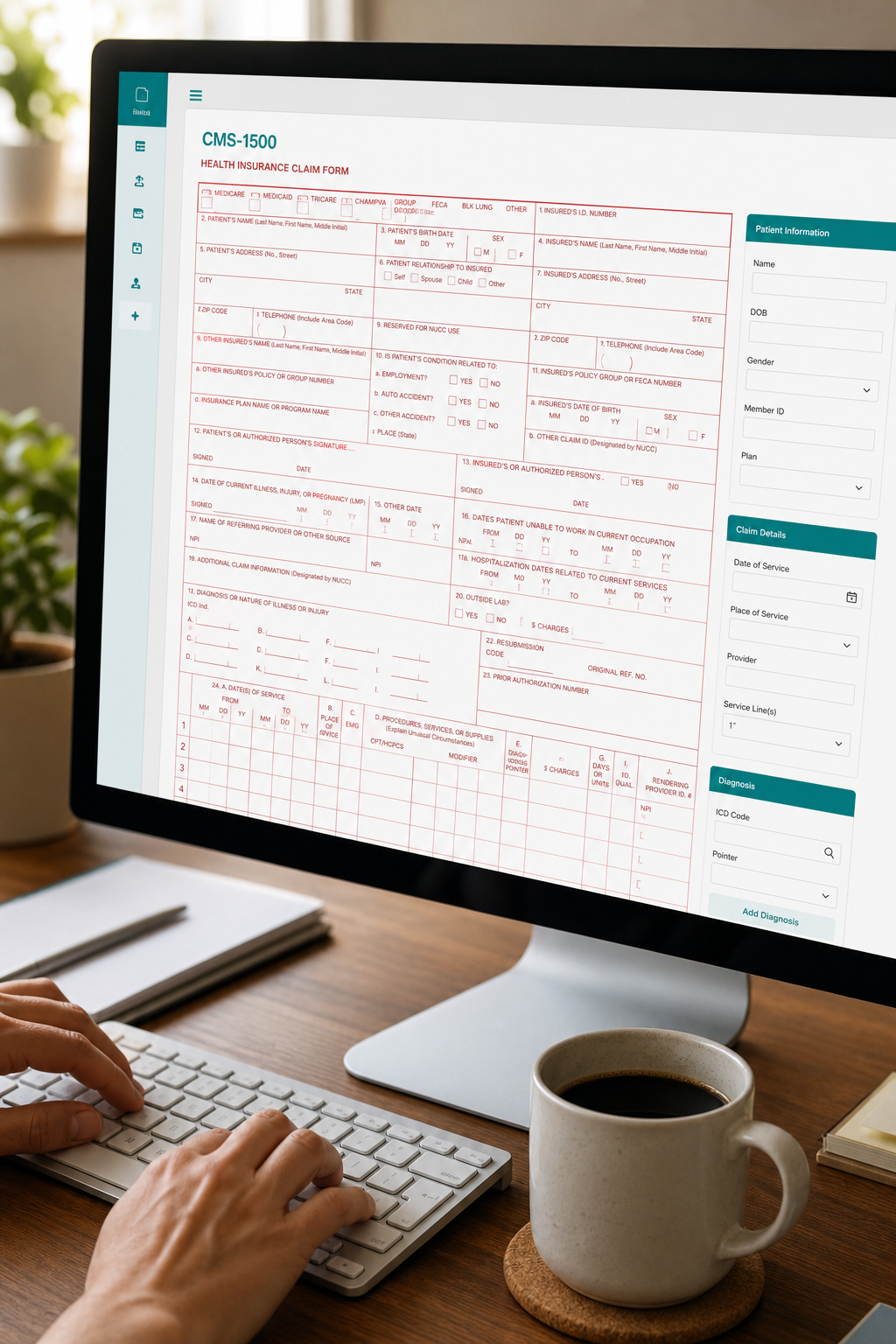 Here’s what you need to get right:
- Rendering provider NPI and taxonomy, Must match the provider’s credentialing record.
- Place of service, 02 for telehealth, 11 for office.
- Diagnosis codes, Link primary diagnosis to each service line.
- Modifiers, Use modifier 95 for telehealth services unless the plan requires GT.
- Timely filing, Anthem typically allows 90 days from DOS, but check the specific plan.
For state Medicaid, submission rules differ. For example, Georgia Medicaid uses a separate system (GAMMIS). Claims Submission To Insurance explains the process in more detail.
One common mistake: submitting to Anthem when the plan uses Carelon for behavioral health. Always confirm the correct payer ID from the eligibility response.
Managing Anthem Denials and Appeals
Denials are inevitable, but Anthem’s denial rates are historically high. A 2019 study showed Anthem’s overall denial rate at 35%, double the industry average ( Behave Health). For behavioral health, a 2014 CBS investigation found denial rates exceeding 90% for mental health claims. While those numbers have likely improved, the pattern persists.
Common denial reasons include:
- Medical necessity, Insufficient documentation of need for the level of care.
- Level of care, Anthem often denies inpatient or intensive outpatient and suggests a lower level.
- Prior authorization not obtained, Many Anthem plans require auth for ongoing therapy beyond a certain number of sessions.
- Timely filing or incorrect payer, Simple errors that can be fixed with a corrected claim.
To appeal, you need a clear medical necessity letter and relevant progress notes. The denial notice will specify the reason and the appeal deadline (usually 180 days). Don’t give up, many denials are overturned on appeal, especially with proper documentation. MCM South specializes in denial management for mental health providers.
State-Specific Considerations: Northeast vs Southeast
Each state in our coverage area has unique nuances. Here’s a breakdown of Anthem plans and Medicaid programs:
- Connecticut: Anthem Blue Cross of Connecticut (CT) dominates. Medicaid is HUSKY Health (D). No Anthem in HUSKY? Actually, Anthem is one of the managed care organizations for HUSKY. Verify which MCO.
- Maine: Anthem Blue Cross of Maine (ME). MaineCare is fee-for-service and managed care. Commercial payers include Harvard Pilgrim and Cigna.
- New Hampshire: Anthem Blue Cross of New Hampshire (NH). NH Medicaid is managed care through WellSense and others. Anthem’s denial rates in NH have been scrutinized, a study showed denial rates for opioid treatment between 9.5% and 28.3%.
- New York: Anthem Blue Cross in some upstate counties (not NYC). NY Medicaid is fee-for-service or managed care (e.g., Healthfirst, Fidelis). For Anthem, coverage is limited outside NYC.
- Virginia: Anthem Blue Cross of Virginia (VA). Medicaid is Cardinal Care (managed care). Major commercial: Aetna, Cigna, UnitedHealthcare.
- Georgia: Anthem Blue Cross of Georgia (GA). Georgia Medicaid (Peach State Health Plan, Amerigroup). Commercial: Cigna, Aetna, UnitedHealthcare. Anthem BCBS of Georgia had one of the highest denial rates in 2019.
Mental health billing services for Georgia discuss this in more depth.
Across all states, know the credentialing requirements for Anthem and Carelon. Credentialing can take 90, 120 days, so start early with new providers. Also, understand that some Anthem plans require separate credentialing with Carelon.
How MCM South Simplifies Anthem Billing for Your Practice
At MCM South Medical Billing Service, LLC, we handle the complexities of Anthem billing so you can focus on patient care. Our services cover the full revenue cycle for mental health providers, solo practitioners and group practices alike.
What we do for Anthem billing:
- Eligibility verification and benefit checks before each session.
- Prior authorization management for plans that require it.
- Correct claim submission with proper payer IDs and modifiers.
- Denial management and appeal writing, including level-of-care disputes.
- State-specific expertise for CT, ME, NH, NY, VA, GA, including their Medicaid programs.
We also coordinate with Carelon when needed. Our team understands that Anthem’s denial patterns require persistent follow-up, we don’t write off denials that can be overturned.
Key Takeaway: With MCM South, you get a partner that speaks the language of Anthem billing across multiple states, so your revenue cycle doesn’t suffer from payer complexity.
Frequently Asked Questions
Does Anthem use Carelon for mental health claims?
Yes, many Anthem plans contract with Carelon Behavioral Health to manage mental health and substance use benefits. Claims often need to be submitted to Carelon using a specific payer ID. Always verify the routing from the patient’s insurance card or by calling the number on the back.
What is Anthem’s denial rate for mental health claims?
Historical data shows Anthem’s denial rates for behavioral health have been as high as 90% in some investigations and consistently double the industry average. While rates have improved, providers should expect a higher-than-average denial rate and be prepared to appeal.
Do I need prior authorization for outpatient therapy with Anthem?
It depends on the plan. Many Anthem commercial plans require prior authorization for ongoing therapy after a certain number of sessions (e.g., 20 visits per year). Check the specific plan’s policy during verification. Some state plans may not require auth for initial evaluations.
How do I submit claims to Anthem in different states?
Use the correct payer ID for each state. For example, Anthem BCBS of Georgia has a different ID than Anthem BCBS of Connecticut. Most clearinghouses maintain a database of payer IDs. Electronic claims (EDI) are preferred; paper claims (CMS-1500) are accepted by some plans but may slow processing.
What should I do if an Anthem claim is denied for level of care?
First, review the denial reason. If it’s a level-of-care dispute (e.g., denied inpatient and suggested outpatient), gather documentation supporting medical necessity for the higher level. Write an appeal letter referencing the patient’s condition and treatment plan. In many cases, these denials are overturned on appeal.
Conclusion
Billing Anthem in the Northeast and Southeast doesn’t have to be a headache. By understanding the role of Carelon, verifying benefits thoroughly, using the correct codes, and staying on top of state-specific rules, you can reduce denials and improve cash flow. If managing this in-house feels overwhelming, consider partnering with a specialized billing service like MCM South Medical Billing Service, LLC. We’ll handle the paperwork so you can spend your time where it matters most, with your patients.